


What Does a PMO Do?
| Question | Answer |
|---|---|
| What does PMO stand for? | Project Management Office |
| What does a PMO do? | Standardizes project delivery, governance, reporting, and strategic alignment |
| Why is a PMO important? | Improves visibility, prioritization, and delivery consistency |
| Who uses PMOs? | Enterprises, IT teams, operations, healthcare, finance, and product organizations |
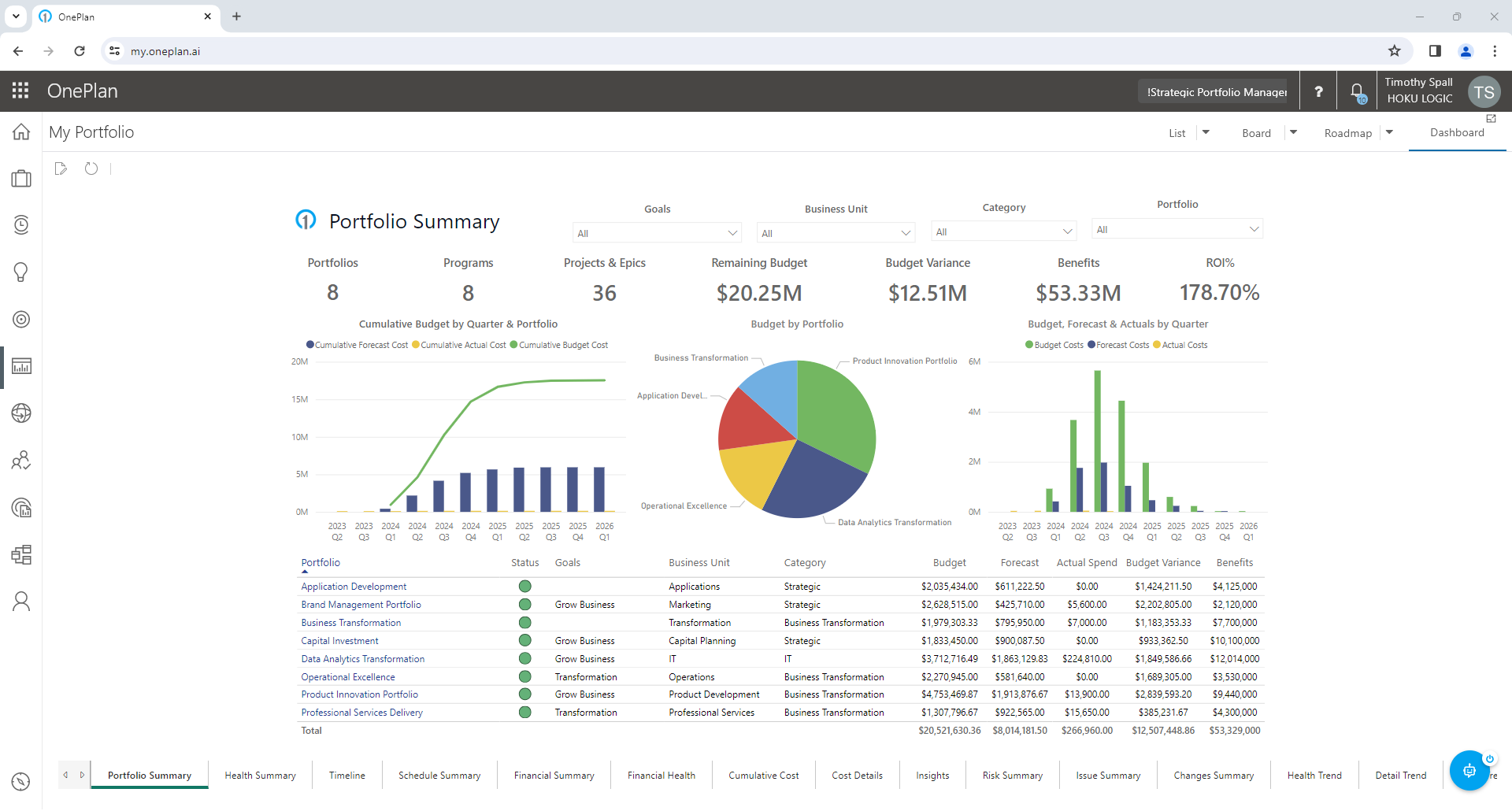
Platforms like OnePlan help PMOs centralize portfolio visibility, giving leadership a real-time view of priorities, resources, risks, and project performance across the organization.
Different Types of PMOs and How to Choose the Right One
Different PMOs serve different scopes:
| PMO Type | Focus | Key Responsibility | Typical Users |
|---|---|---|---|
| Project PMO | Individual projects | Delivery standards and reporting | Project managers |
| Program PMO | Related initiatives | Dependency management | Program managers |
| Portfolio PMO | Enterprise investments | Strategic prioritization | Executives and PMO leaders |
Delivery approach matters. Adaptive organizations blend Agile and traditional methods. An Agile PMO focuses on flow, lightweight governance, and empowered product teams. Hybrid models combine stage-gate with Agile guardrails like lean portfolio governance and rolling-wave planning. Choose a model that fits regulatory needs, risk profile, and pace of change—then support it with the right project mgmt software.
PMO Roles and Responsibilities Explained
A PMO helps organizations standardize delivery, improve visibility, and align projects with business strategy. Core responsibilities typically include governance, resource and capacity planning, portfolio reporting, risk management, and benefits realization.
Effective PMOs create consistent processes for planning, prioritization, forecasting, and decision-making. They also provide leadership with clearer visibility into project health, budgets, risks, and resource utilization through centralized reporting and portfolio dashboards.
Common PMO roles include PMO Directors, portfolio and program managers, project managers, resource managers, analysts, and PMO specialists.
Responsibilities vary by PMO type. Project-level PMOs focus on delivery standards and reporting, while program offices manage cross-project dependencies. Strategic or portfolio PMOs support investment prioritization, scenario planning, and enterprise portfolio management alongside executive leadership.
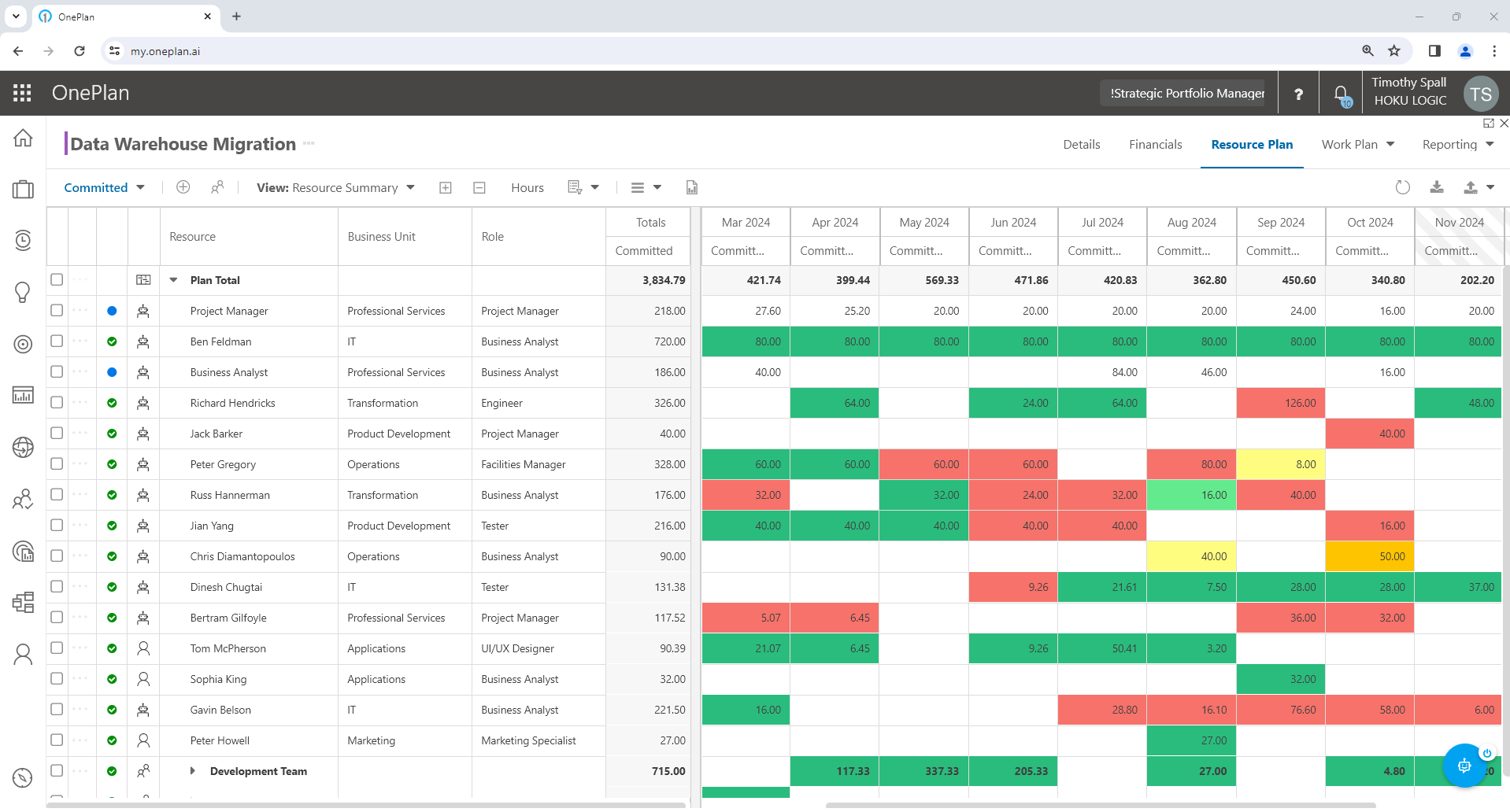
OnePlan’s resource capacity planning and forecasting tools help PMOs balance demand against available resources before bottlenecks impact delivery timelines.
How a PMO Delivers Business Value
A strong PMO helps organizations focus on the right work, use resources more effectively, and make better investment decisions. By connecting strategy to execution, PMOs improve visibility across projects, budgets, timelines, and business goals.
Successful PMOs track KPIs like on-time delivery, budget performance, resource utilization, forecast accuracy, and benefits realization. This gives leadership clearer insight into which initiatives are driving value and which projects may need to be reprioritized.
For example:
- An IT PMO may use portfolio dashboards to prioritize digital transformation initiatives and reduce resource bottlenecks.
- A healthcare PMO might improve compliance tracking and budget visibility across large operational projects.
- A product or engineering PMO can use scenario planning to evaluate roadmap tradeoffs before committing resources.
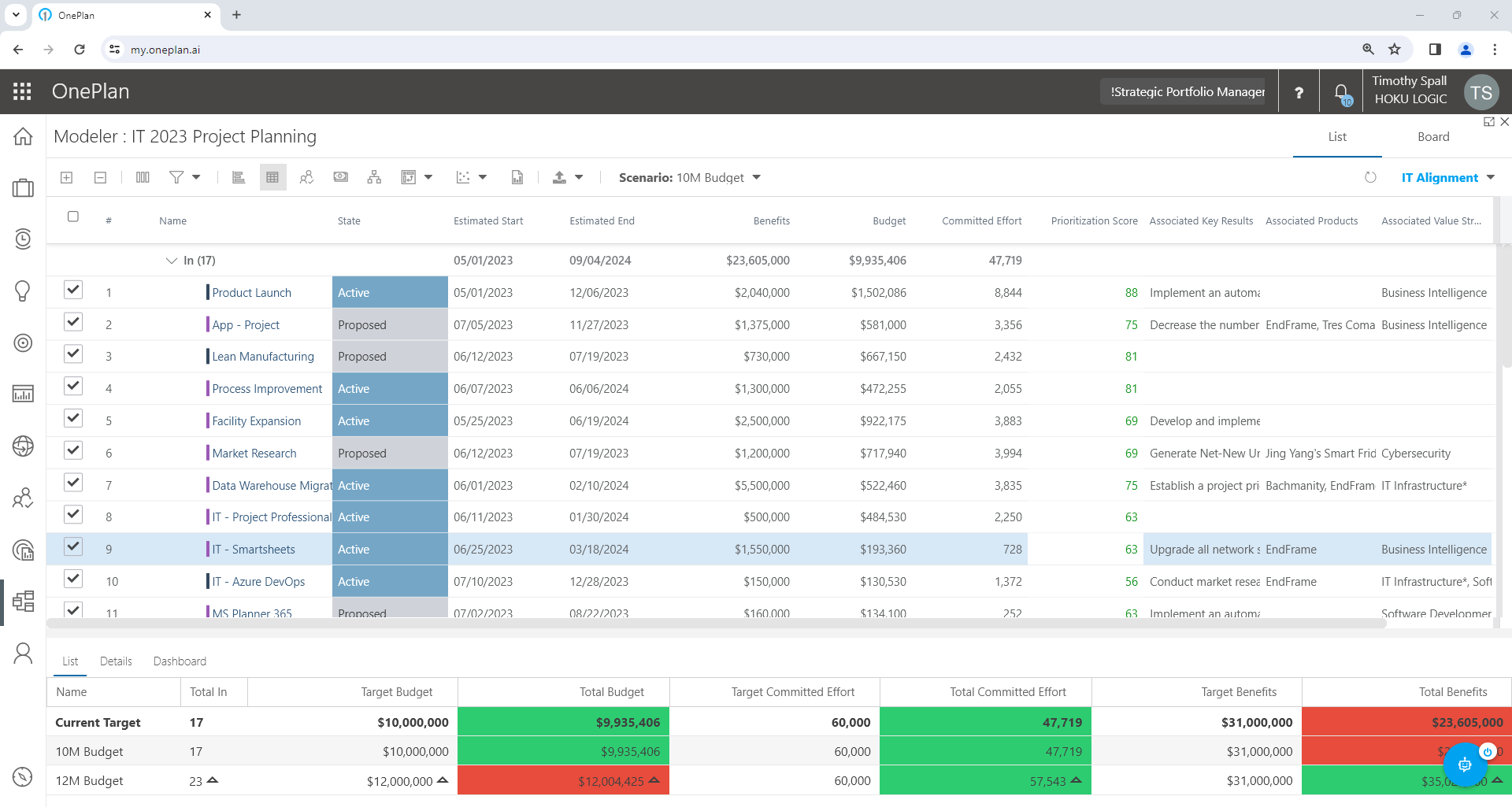
Modern project mgmt software also helps organizations centralize reporting, improve forecasting, and quickly adjust priorities as business needs change. With OnePlan’s scenario planning capabilities, PMOs can compare investment options, model resource impacts, and make faster prioritization decisions with greater confidence.
Steps to Successfully Implement a PMO
1. Assess Current Maturity
Start by evaluating your organization’s current project management processes, reporting capabilities, and resource visibility. Identify gaps in governance, prioritization, forecasting, and collaboration to determine what type of PMO structure and support your organization truly needs.
2. Define Governance
Establish clear processes for project intake, prioritization, approvals, reporting, and decision-making. Strong governance creates consistency and accountability while helping teams align projects with business strategy without adding unnecessary bureaucracy.
3. Select PMO Software
Choose PMO software that centralizes portfolio planning, resource management, financial tracking, and reporting in one place. Look for capabilities like real-time dashboards, scenario planning, integrations, and forecasting to improve visibility and decision-making across the organization.
4. Establish Reporting
Standardized reporting helps leaders understand project health, resource utilization, risks, budgets, and strategic alignment. Define clear KPIs and create dashboards tailored for executives, PMO leaders, and project teams to support data-driven decisions.
5. Drive Adoption
Successful PMO implementation depends on stakeholder buy-in and continuous improvement. Communicate the value of the PMO early, provide training, gather feedback, and focus on quick wins that demonstrate measurable impact across the organization.
Common PMO Challenges and How to Solve Them
Common challenges include limited resourcing, inconsistent executive backing, and fragmented toolsets. Mitigate them by building a sponsorship coalition, proving value with quick wins, right-sizing governance to avoid bureaucracy, and consolidating around an integrated PMO software platform. Invest in data quality and training so insights are trusted and decisions are faster. With the right Project Management Office structure, processes, and technology, your PMO becomes a strategic engine, not just a reporting function.
How Technology Supports Modern PMOs
As organizations continue to balance speed, complexity, and strategic change, the ability to connect planning, resources, and execution in one clear view becomes critical. This is where modern PMO software can make a meaningful difference. OnePlan helps unify portfolio planning, resource management, and financial insights, giving PMOs the visibility and flexibility they need to evolve from operational support to true strategic partners. With the right foundation in place, your PMO can move beyond oversight and become a driving force behind long-term success.
Getting a new PMO off the ground? Set up a quick call for guidance.


