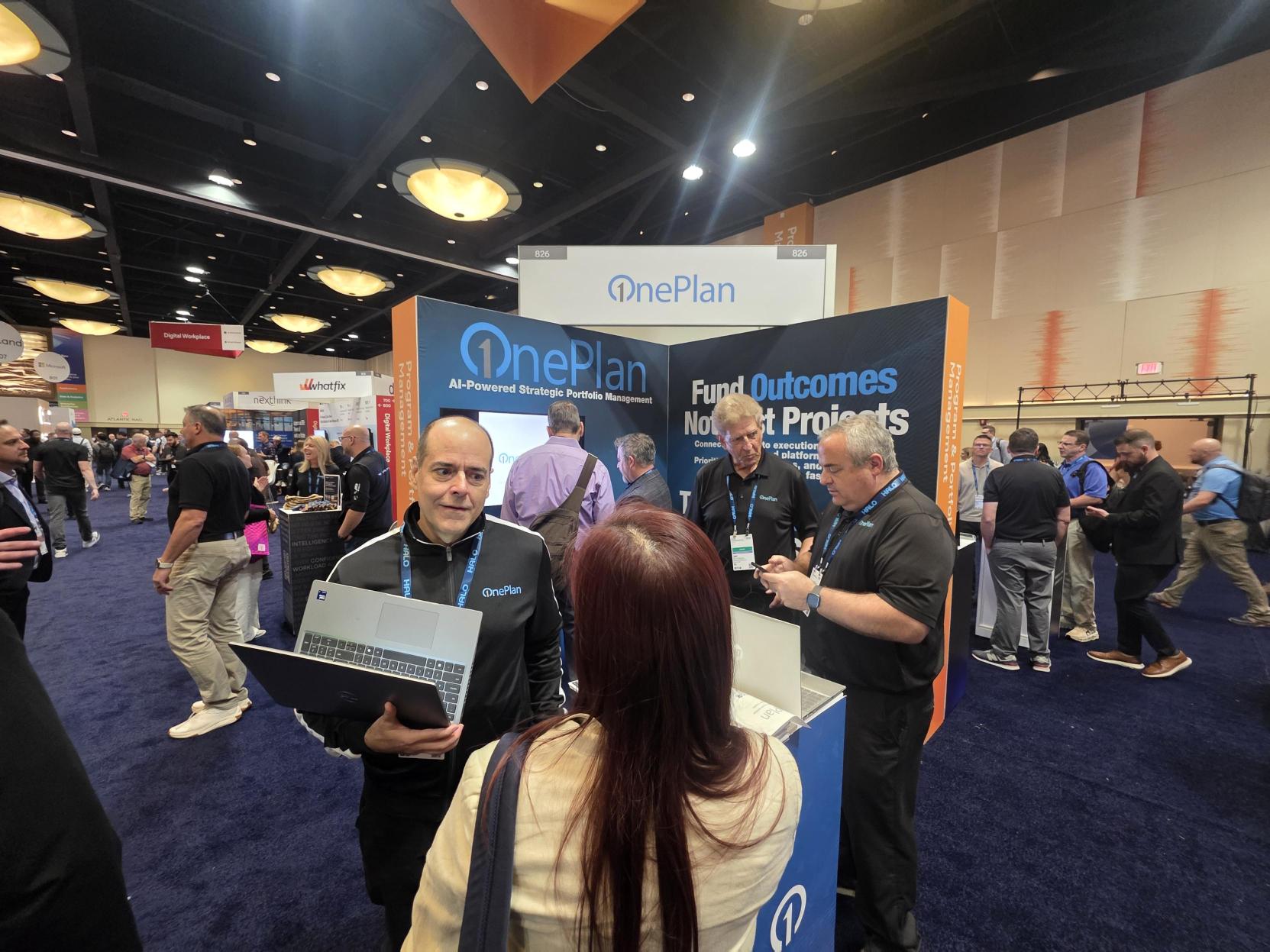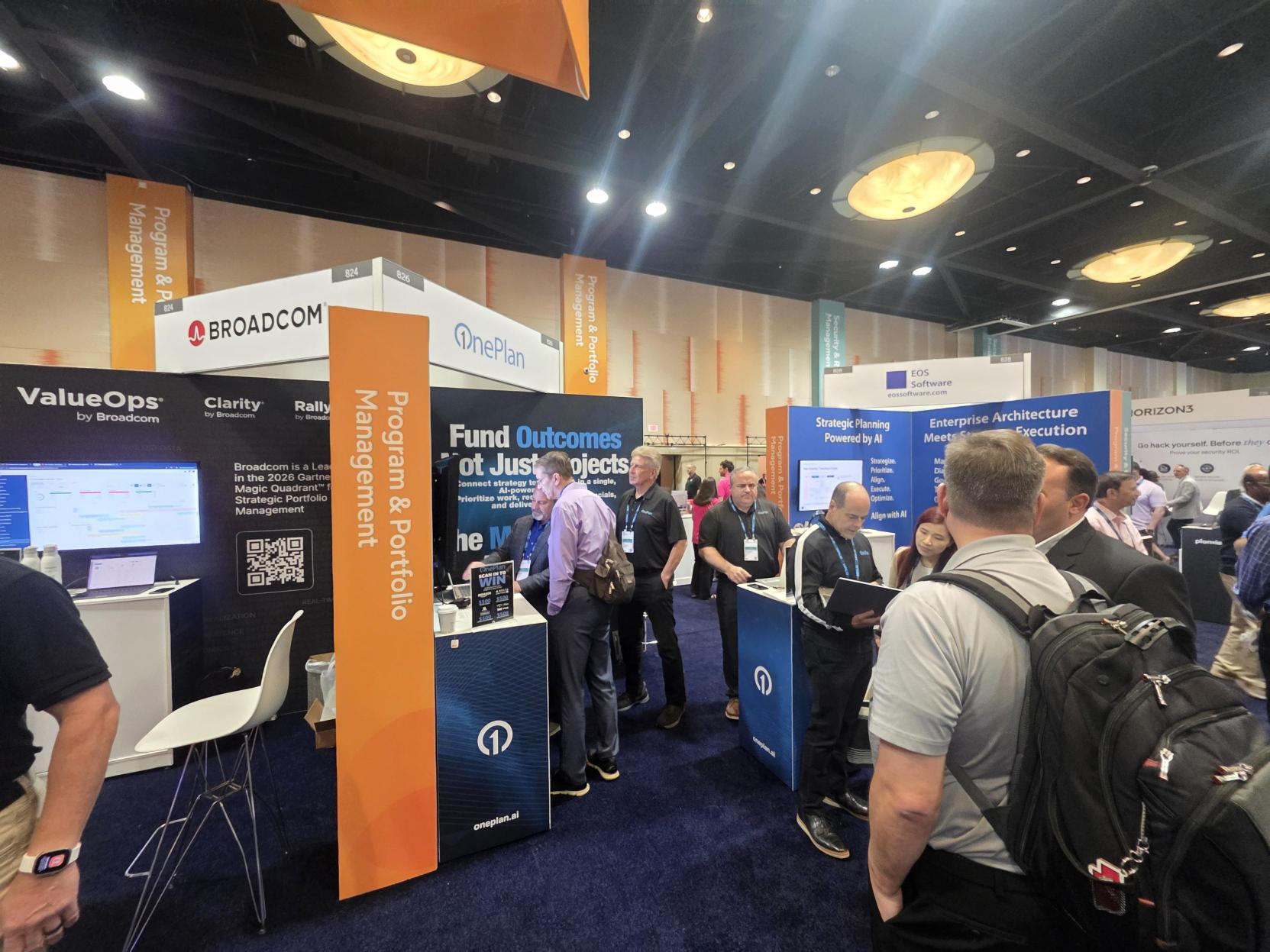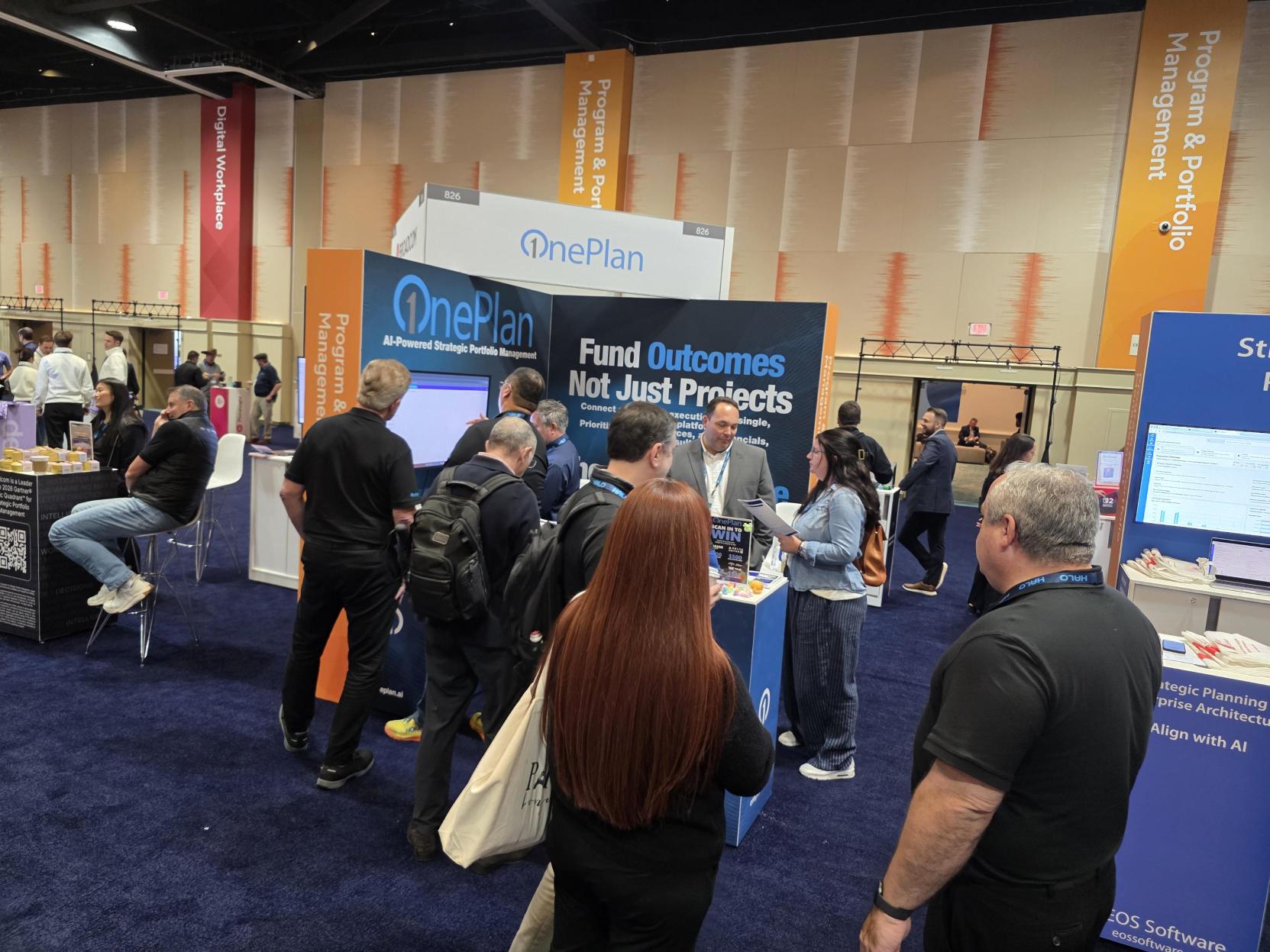
Another Symposium is in the books! If you were in Orlando, thank you for stopping by the OnePlan booth. If you couldn’t make it, here’s our take on what mattered most, what we heard from the people we talked to, and where we think things are headed.
The big message: AI value has to outrun AI risk
Nobody was surprised that AI dominated the agenda. What stood out was the tone. The excitement of the last two years has given way to a more grown-up conversation about results.
Gartner set that tone right away. In the opening keynote, analysts told an audience of more than 7,500 CIOs and IT executives that value and risk are linked, and that the real job is making value compound faster than risk. The numbers behind that were sobering. Gartner’s 2026 C-Suite AI Survey found that only one in five AI use cases delivers a positive return, while 86% of CIOs say AI risk is growing faster than AI value in their organizations. Another survey found only 13% of CIOs say their enterprise has realized significant or transformational value from AI.
The advice that followed was refreshingly practical. AI use cases have grown 400% in the past year, but Plummer urged CIOs to aim for value rather than volume: audit what’s running, and scale the successes instead of piling on new experiments. Gartner also encouraged CIOs to stop treating AI as a collection of separate projects and start managing it as one compounding system. Our favorite line of the week came from the keynote’s closing warning about bolting AI onto old ways of working: “Never strap a jet engine to your horse.”
Governance is where the gap is widest. Only 21% of CIOs have governance in place for agentic AI, yet 71% plan to deploy it this year. Kristin Moyer suggested organizations create an “AI central bank” to support governance and accountability. That’s a memorable way of saying AI investment needs a single place where someone tracks what’s funded, what it costs, and what it returns.
What we heard at the booth
The keynote stage and the expo floor told the same story, just in different words.
AI was top of mind for nearly everyone who stopped by, and the people we met came from all kinds of starting points. Some already had a strategic portfolio management (SPM) tool and were actively looking to replace it. Others had built their own system in-house and were feeling its limits. And yes, a few of you are still running your portfolio on Excel. No judgment; we’ve all been there.
A few clear patterns emerged:
- AI governance was the most requested demo. Leaders want to see how to take inventory of AI initiatives, prioritize them, and track them like any other investment. That matches exactly where Gartner says the gap is.
- AI built into planning was a close second. Our integrations with Claude and Sofia drew a crowd. People were curious about AI that helps them plan, not just AI they have to plan for.
- Cost matters. We had many candid conversations about budgets. Some teams are paying a lot for their current tools and want something that delivers similar capability without the premium price.
- Everyone wants to skip slide prep. More than a few people asked about generating PowerPoint presentations directly from their portfolio data. Hours spent building status decks is time not spent on decisions, and leaders are tired of it.
When we grouped the conversations by topic, the same themes kept coming up: resource capacity, what-if planning, resource utilization, SPM, AI governance, and spend. Nearly every conversation came back to some version of the same question: what can we actually take on, and is it worth it?
Where things are headed
Putting Gartner’s research next to what we heard on the floor, a few directions seem clear.
AI is becoming a portfolio, not a pilot program. Gartner predicts that by 2029, 60% of organizations deploying AI will have a dedicated function responsible for mapping AI’s total cost to value or profit. In other words, AI is moving under the same discipline as every other major investment: business cases, prioritization, capacity checks, and benefits tracking.
AI spend is becoming a governance issue in its own right. Gartner predicts AI will cut build costs per unit in half over the next 18 months while doubling or tripling run costs. That shifts the economics in ways a one-time approval won’t catch. It’s another reason the leaders we spoke with want ongoing visibility into spend, not a single check at funding time.
Capacity is the real constraint. Budgets get the headlines, but the conversations we had kept landing on people: who’s available, what skills you actually have, and how much change the organization can absorb. You can’t scale AI, or anything else, with teams that are already fully booked.
Planning is becoming continuous. Annual plans can’t keep up when costs, technology, and priorities change every quarter. The organizations pulling ahead are reviewing their portfolios more often and testing scenarios before they commit, not after.
What leaders should take away
If we had to boil the week down to a few practical moves for 2027, they’d be these:
- Inventory your AI. You can’t govern what you can’t see. Start with a single list of every AI initiative, along with its owner, cost, and intended outcome.
- Put capacity into every funding decision. Before approving new work, model what it will draw on, from people and skills to budget, and what will slip as a result.
- Run what-if scenarios before you commit. Compare your options side by side so trade-offs are explicit, not discovered halfway through delivery.
- Measure outcomes, not activity. Track whether initiatives deliver adoption, savings, and business impact, and use those results to decide what gets funded next.
- Cut the reporting busywork. If your team spends days assembling slides each month, that’s capacity you could put back into higher-value work.
Thanks, Orlando
Symposium is always a great reminder that the hardest problems in IT aren’t purely technical. They’re about choices: where to invest, what to stop, and how to prove it was worth it. Thank you to everyone who spent time with us, shared what you’re dealing with, and asked tough questions.
If any of this sounds like your 2027 planning season, we’d love to keep the conversation going. Visit us at oneplan.ai to see how OnePlan brings AI governance, resource capacity, and what-if planning together in one place.